

If there’s one part of a garden worth getting absolutely right, it’s the paving. Your patio is the most-used surface in the garden, the backdrop to every meal and gathering outdoors — and the hardest thing to change once it’s laid. Good paving is the difference between a garden that looks smart on handover day and one that still looks exceptional fifteen years on.
At Gardenviews we’ve designed and laid patios across Dublin in everything from large-format porcelain to natural stone. Here are the paving ideas we return to in real projects — and the design decisions behind them.
1. Large-Format Porcelain: The Modern Standard
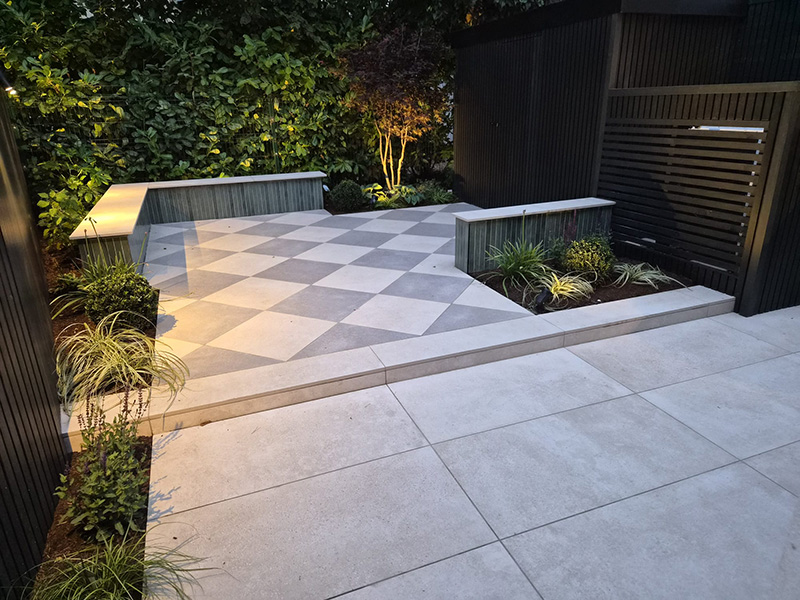
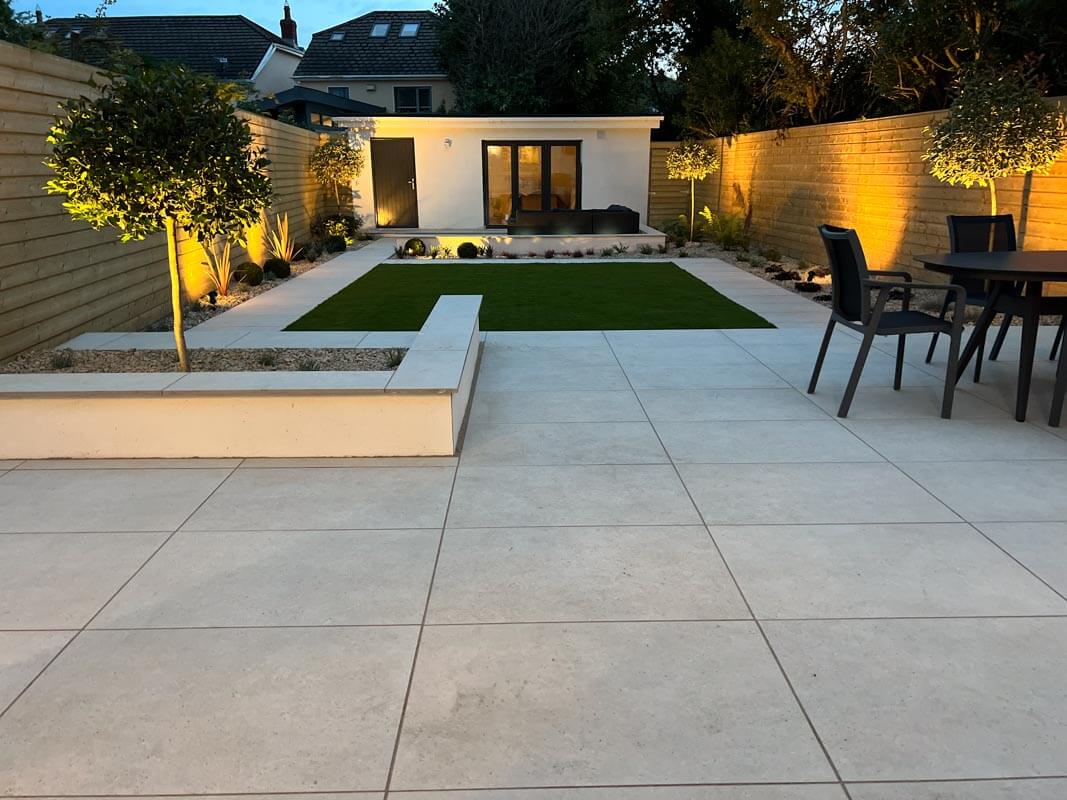
Oversized porcelain slabs — 800mm and up — have become the signature of contemporary Irish garden design, and for good reason. Fewer joints mean cleaner lines and a calmer, more architectural feel. Porcelain is slip-resistant, fade-resistant and virtually maintenance-free — no sealing, no staining, and moss struggles to take hold. In Irish weather, that matters more than anywhere.
You can see the effect in our Clontarf garden, where porcelain terraces flow across three levels — the consistent surface is what unifies the whole design.
2. Natural Stone: Character That Deepens with Age
Where porcelain is crisp and contemporary, natural stone — granite, limestone, sandstone — brings warmth, variation and a texture that mellows beautifully over time. It suits period homes and mature gardens especially well, where machine-perfect surfaces can feel out of place. The trade-off is honest: natural stone asks for occasional sealing and care. What it gives back is character no manufactured product quite matches.
3. Design the Layout, Not Just the Material
The same slab laid three different ways produces three different gardens. A stack-bond grid feels architectural and modern; a staggered running bond softens and widens a narrow space; laying slabs in line with the main sightline from the house draws the eye down the garden and makes the whole plot feel longer.
4. Zone with a Change of Surface
In larger gardens — and especially in small gardens — a shift in paving signals a change of purpose: porcelain for the dining terrace, a band of granite setts marking the transition, gravel or lawn beyond. Our Templeogue project shows how paved zones and soft landscaping can share one garden without competing.
5. Steps and Levels: Where Paving Becomes Architecture
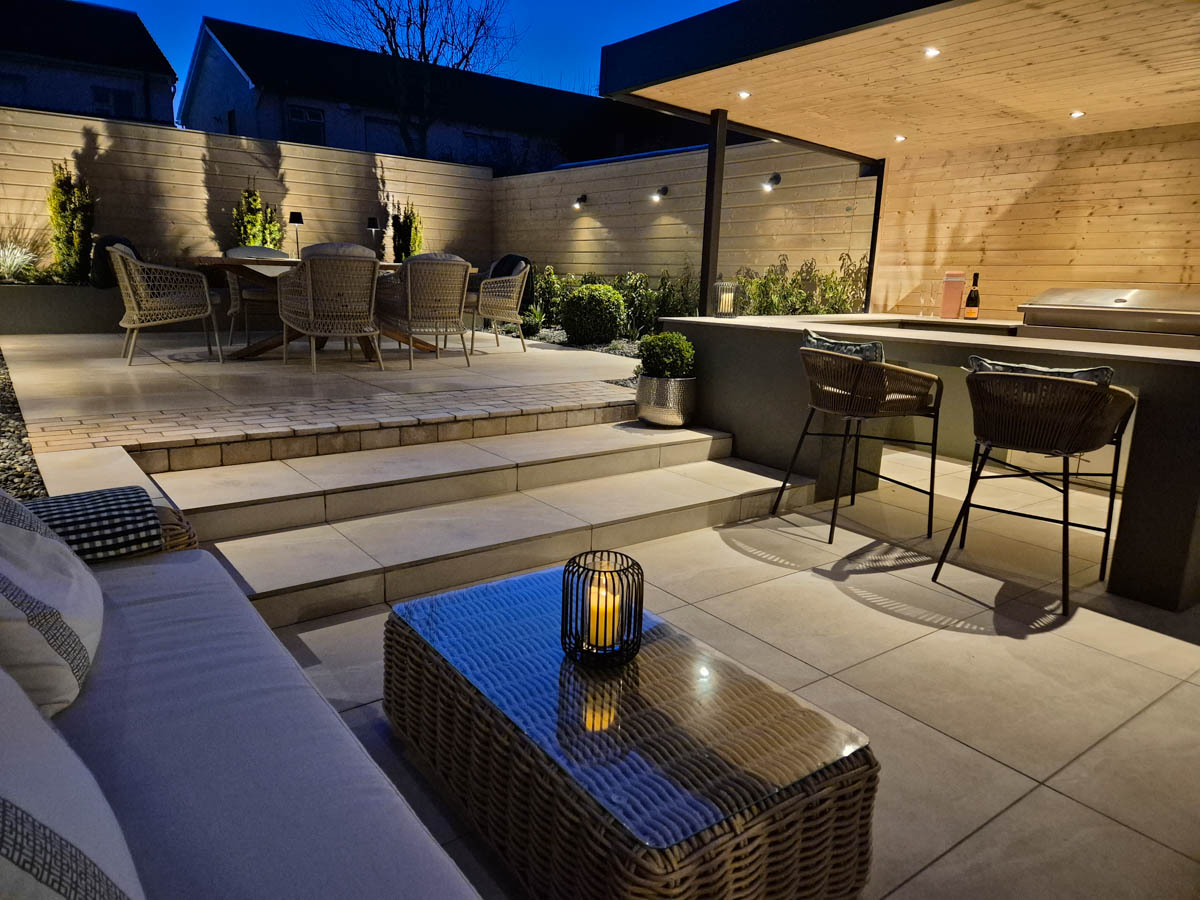
Wide, generous steps in the same material as the terrace turn a level change from an obstacle into a feature. Matching risers and treads to the main paving keeps the design coherent; a floating step with a shadow gap or concealed lighting strip elevates it further. Our multi-tier garden in Malahide is built on exactly this principle — the paving and steps are the architecture.
6. Light the Surface You Invested In
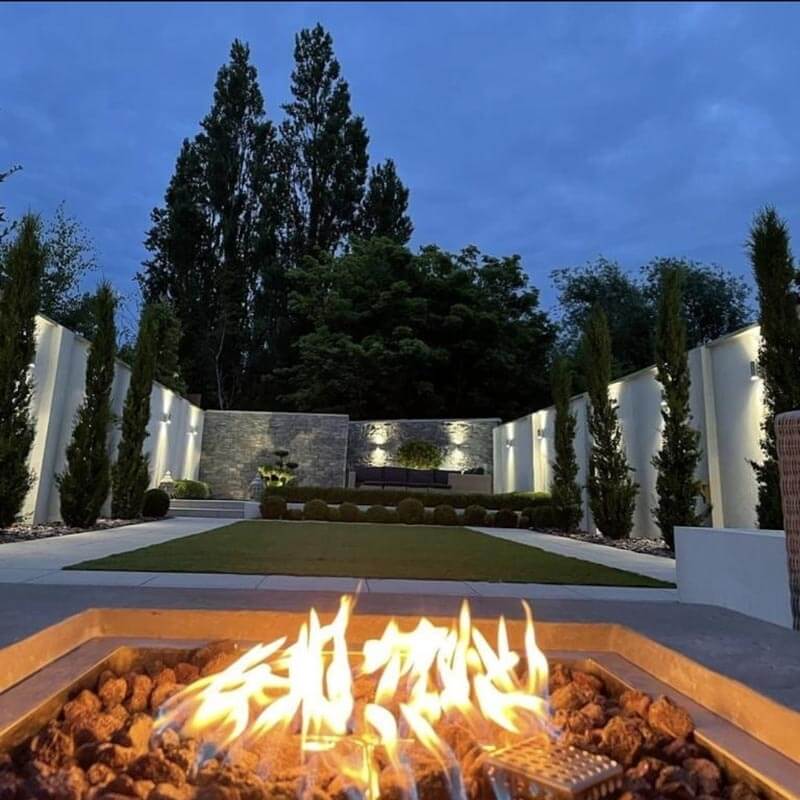
Recessed uplights along a terrace edge, step lights under treads, a soft wash across textured stone — lighting is what lets your paving work after dark, which in Ireland is most of the year. Ducting costs almost nothing to install during the build and everything to retrofit afterwards, so plan lighting with the paving, not after it. See the difference in our gardens at night gallery.
7. The Details That Separate Good from Exceptional
Bullnosed or mitred edges on steps and raised beds. Consistent joint widths. Drainage falls planned so water sheds away invisibly, with no channels cutting across the terrace. Borders and edging that frame the paving like a picture. None of these appear on a materials quote as headline items — all of them are what your eye reads as quality every single day.
8. Build It Properly or Don’t Build It
Every paving failure we’re asked to rescue — rocking slabs, sunken corners, spreading joints — comes down to what’s underneath. Porcelain and stone must be laid on a full concrete base with proper falls, not dabs of mortar on hardcore. It’s the least visible part of the job and the most important: the surface is only ever as good as its foundation.
What Does a New Patio Cost?
As a guide, a professionally designed and built porcelain or natural stone patio in Dublin typically starts from around €8,000–€12,000 for a standard terrace, with larger multi-level schemes forming part of wider renovations. For full context on garden budgets, see our 2026 Dublin Garden Renovation Cost Guide — and read more about our garden patios and paving service.
Planning a New Patio or Garden?
Autumn and winter are the ideal time to design — your paving is chosen, planned and built ready for the first good weekend of spring. Browse our recent projects for inspiration, or get in touch to arrange a consultation — we’ll walk your garden with you and show you, in full 3D, what it could become.