

Raised flower beds have become one of the most popular features in modern Irish garden design, and it’s easy to see why. They add structure, create visual interest, improve drainage, make gardens easier to maintain, and provide the perfect opportunity to introduce stunning planting schemes that can be enjoyed throughout the year.
Whether you’re redesigning a family garden in Malahide, creating an outdoor entertaining space in Clontarf, or modernising a property in Dalkey or Rathmines, raised flower beds can completely transform how a garden looks and functions.
At GardenViews, raised beds are often a key feature within our garden designs because they help define spaces, introduce different levels, and provide ideal planting areas for everything from colourful flowering plants to specimen trees and architectural foliage.
In this guide, we’ll look at some popular raised flower bed ideas, the best materials to use, typical costs in Ireland, and the planting approaches we use to create beautiful, low-maintenance gardens that look fantastic throughout the year.
Why Raised Flower Beds Are So Popular
A well-designed raised flower bed offers far more than somewhere to grow plants.
It creates structure within a garden and helps connect different outdoor areas together. Raised beds can be used to frame patios, separate lawns from entertaining spaces, create privacy screening, or simply add height and visual interest to an otherwise flat garden.
Some of the biggest benefits include:
Improved Drainage
Ireland’s climate means drainage is always an important consideration. Raised beds naturally improve drainage by elevating the planting area above ground level, helping many plants establish healthier root systems.
Easier Maintenance
Raised beds reduce soil compaction, make weeding easier, and generally require less ongoing maintenance than traditional borders.
Defined Garden Spaces
One of the reasons we regularly incorporate raised beds into our designs is their ability to create clear zones within a garden. They help establish a sense of order and give the entire space a more professionally designed appearance.
Better Planting Opportunities
Raised beds allow greater control over soil quality and planting conditions, creating an ideal environment for a wide range of plants and trees.
Additional Seating
Many raised beds can be designed with integrated seating, making them both attractive and practical.
Popular Raised Flower Bed Ideas
Contemporary Rendered Raised Beds
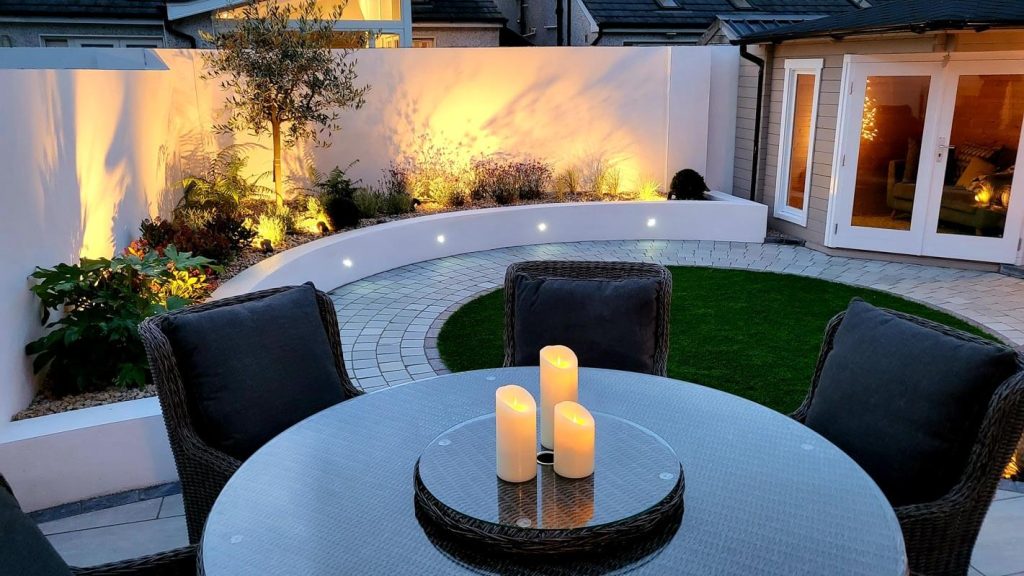
For modern homes, rendered masonry raised beds remain one of the most popular choices.
Combined with porcelain paving, outdoor lighting and carefully selected planting, they create a clean and sophisticated appearance that works particularly well in contemporary Dublin gardens.
Raised Beds Around Patios
Surrounding a patio with raised planting immediately softens the hard landscaping and creates a more immersive outdoor living experience.
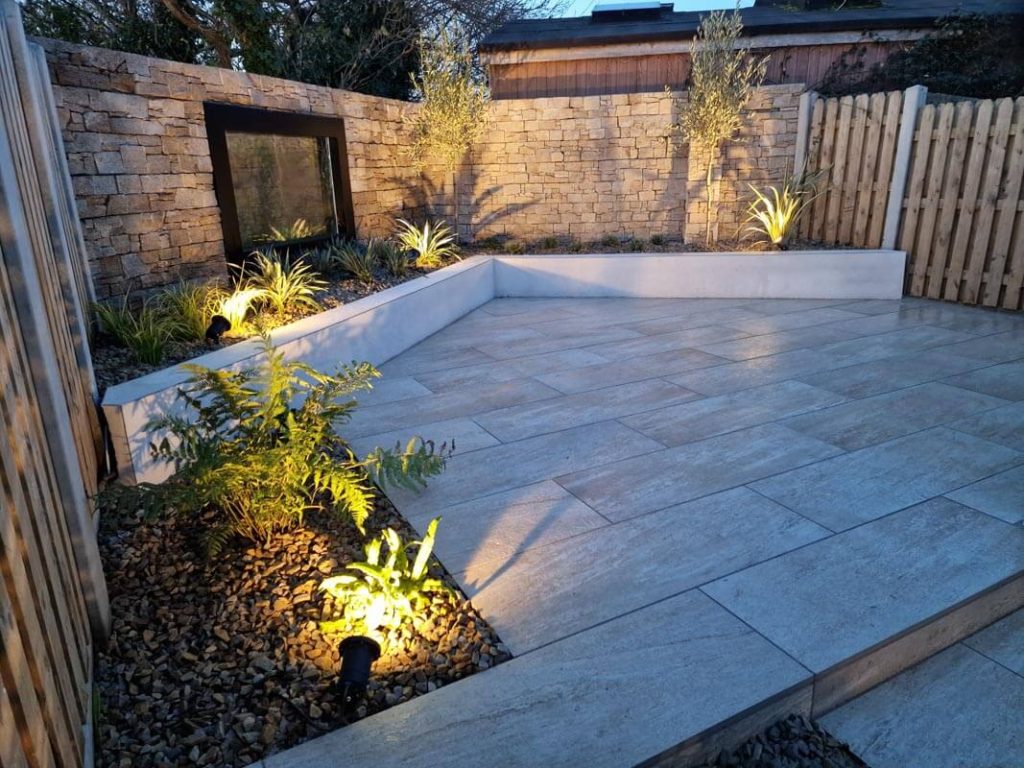
The planting sits closer to eye level, making flowers, foliage and fragrances much more noticeable while relaxing outdoors.
Multi-Level Garden Designs
For sloping sites, raised flower beds can double as retaining structures while creating attractive planting zones and improving usability.
Raised Beds With Feature Trees
One of our favourite design approaches is incorporating feature trees within raised beds. These trees create focal points, provide year-round structure and add character to the garden long after flowering plants have finished their seasonal display.
Our Favourite Trees for Raised Flower Beds
Feature trees often become the centrepiece of a garden design.
Olive Trees (Olea europaea)
Olive trees have become increasingly popular in contemporary Irish gardens. Their silver-green foliage and sculptural trunks create a Mediterranean feel while complementing modern landscaping materials beautifully.
Bay Laurel (Laurus nobilis)
Bay trees provide elegant evergreen structure throughout the year. They can be clipped into formal shapes or allowed to grow naturally and work particularly well near patios and outdoor entertaining spaces.
Dicksonia antarctica (Soft Tree Fern)
One of our personal favourites at GardenViews is the Dicksonia antarctica, often referred to as the Soft Tree Fern or Tasmanian Tree Fern.
This stunning specimen plant creates an exotic and luxurious feel, with dramatic arching fronds that bring movement, texture and architectural interest to a garden. Despite its tropical appearance, it performs surprisingly well in many Irish gardens when positioned correctly.
When illuminated at night, a mature Dicksonia antarctica can become one of the most impressive focal points in an entire garden.
Choosing the Right Plants for Your Garden
One thing we always explain to clients is that we’re not committed to using any particular tree, shrub, or flower in every garden we design.
Every garden is different.
Some gardens enjoy full sun throughout the day, while others may be heavily shaded by neighbouring buildings, mature trees, walls, or fencing. Soil conditions, drainage, wind exposure and even how the homeowner intends to use the space all play an important role in determining which plants will thrive.
That’s why we never approach planting with a fixed formula.
Instead, Philip and the GardenViews team carefully assess each garden before recommending a planting scheme. The goal is always to create a garden that looks beautiful, suits the property, and continues to perform well for years to come.
While every design is bespoke, there are certain plants and trees we regularly use because they provide excellent structure, colour, texture and year-round interest.
For example, Olive Trees, Bay Laurels and Dicksonia antarctica are all popular choices for creating strong focal points.
For planting schemes, we often use plants such as Purple Agapanthus (African Lily), Fatsia japonica, Lavender and Buxus sempervirens because they can offer a fantastic combination of colour, structure and visual appeal.
However, these are simply examples of plants we frequently use. The final selection will always depend on the specific conditions within the garden.
In fact, one of the biggest trends we’re seeing among Dublin homeowners is a desire for beautiful gardens that don’t require constant attention.
Most of our clients lead busy lives and want outdoor spaces they can enjoy rather than spend every weekend maintaining. Because of this, we often favour low-maintenance planting schemes that provide year-round interest, seasonal colour and attractive structure without demanding excessive upkeep.
The objective isn’t simply to fill a raised flower bed with plants.
It’s to create a balanced planting scheme that looks attractive throughout spring, summer, autumn and winter while complementing the lifestyle of the homeowner.
Plants We Frequently Use in Raised Flower Beds
Purple Agapanthus (African Lily)
Agapanthus is one of the most striking summer flowering plants available.
Its tall stems and vibrant purple blooms create strong visual impact and work particularly well in contemporary garden designs.
Fatsia japonica (Japanese Aralia)
Fatsia provides large architectural evergreen leaves that add texture and a subtle tropical feel to a garden.
Lavender
Lavender remains a favourite for good reason. It offers beautiful colour, fragrance and pollinator-friendly planting while remaining relatively easy to maintain.
Buxus sempervirens
Buxus is often used to create structure within planting schemes. Whether clipped into formal shapes or used as low hedging, it provides year-round definition.
Other Popular Choices
Depending on the garden’s conditions, we may also use:
- Ornamental grasses
- Hydrangeas
- Salvia
- Hebe
- Euphorbia
- Ferns
- Pittosporum
- Japanese Anemones
- Verbena bonariensis
- Alliums
- Heuchera
The Best Materials for Raised Flower Beds
Rendered Block Construction
This is often our preferred choice for premium garden projects.
Benefits include:
- Long lifespan
- Contemporary appearance
- Wide range of finishes
- Excellent structural integrity
- Ability to integrate seating and lighting
Natural Stone
Natural stone provides a timeless appearance that works particularly well in traditional gardens and period properties.
Granite
Granite offers exceptional durability and a premium finish. While more expensive, it can last for decades with very little maintenance.
Timber Sleepers
Timber sleepers remain popular due to their affordability and natural appearance.
However, they generally require more maintenance and have a shorter lifespan than masonry construction.
Composite Materials
Composite systems are becoming increasingly popular due to their low-maintenance qualities and long-term durability.
How Much Do Raised Flower Beds Cost in Ireland?
Costs vary significantly depending on materials, size, planting requirements and site access.
Typical guide prices include:
Timber Sleeper Raised Beds
- Small project: €500 – €1,500
- Medium project: €1,500 – €3,000
Masonry or Rendered Raised Beds
- Small feature bed: €1,500 – €3,500
- Medium installation: €3,500 – €8,000+
- Premium bespoke projects: €8,000 – €20,000+
Planting Costs
Planting budgets can range from:
- Basic planting: €300 – €1,000
- Feature planting schemes: €1,000 – €5,000+
- Mature specimen trees: €500 – €5,000+
The final investment depends heavily on the scale of the project and the maturity of the plants selected.
Bringing Raised Flower Beds to Life With Garden Lighting
A garden shouldn’t disappear once the sun goes down.
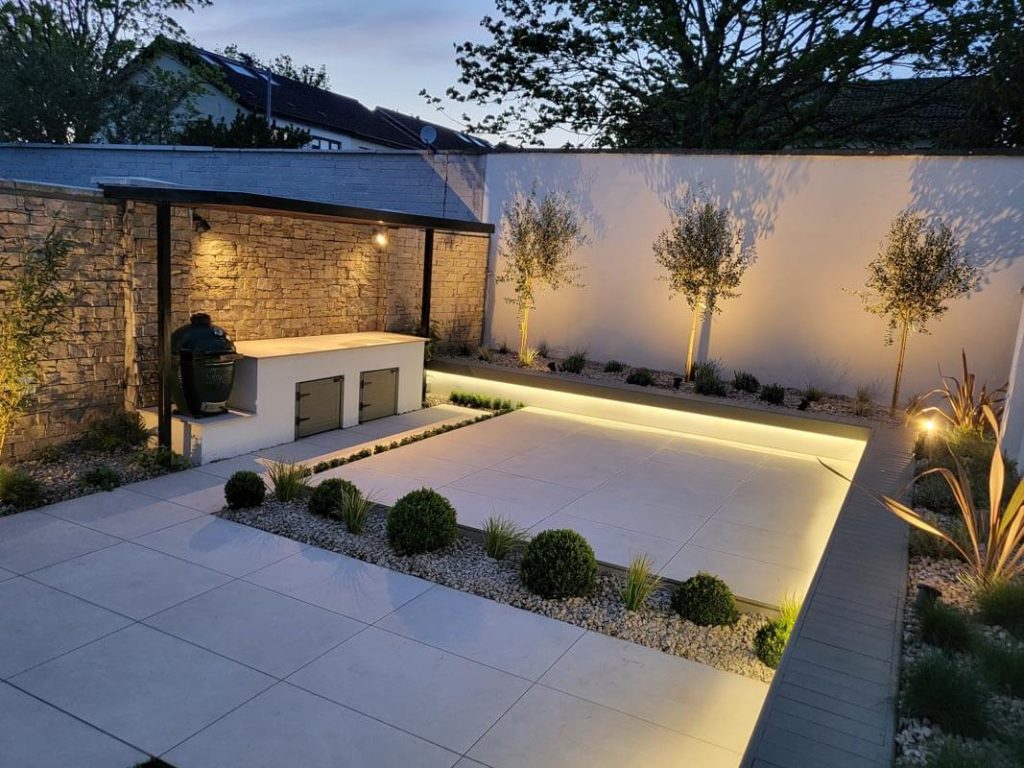
One of the features we regularly incorporate into our designs is professional garden lighting that allows clients to enjoy their outdoor spaces long into the evening.
Uplighting Feature Trees
Olive Trees, Bay Laurels and Dicksonia antarctica look spectacular when illuminated from below.
The lighting highlights their shape, texture and structure while creating stunning focal points.
Accent Lighting for Planting
Strategically positioned lighting can showcase flowers, ornamental grasses and architectural foliage while creating atmosphere and depth.
Integrated Raised Bed Lighting
LED lighting can be built directly into raised bed walls, providing subtle illumination while enhancing safety and usability.
Path and Feature Lighting
Carefully designed lighting schemes help connect different areas of the garden and create a warm, welcoming atmosphere after dark.
The result is a garden that feels just as impressive in the evening as it does during the day.
Why Professional Design Matters
While raised flower beds may seem straightforward, creating a planting scheme that looks attractive throughout the year requires experience and careful planning.
Sunlight, shade, drainage, soil quality, maintenance requirements, planting combinations and lighting all need to work together.
At GardenViews, Philip and the team have spent more than 30 years designing and building bespoke gardens throughout Dublin. Every raised bed is carefully considered as part of the wider garden design to ensure it complements the property, suits the homeowner’s lifestyle and continues to look fantastic year after year.
If you’re considering a garden redesign and would like advice on raised flower beds, planting schemes, garden lighting or feature trees, we’d be delighted to help create a garden tailored specifically to your home.
Frequently Asked Questions
Are raised flower beds suitable for small gardens?
Yes. Raised beds are often particularly effective in smaller gardens because they introduce structure and maximise planting opportunities without taking up excessive space.
What is the best material for a raised flower bed?
For longevity and appearance, rendered block construction and natural stone are often the preferred choices. Timber sleepers offer a more budget-friendly alternative.
What plants work best in raised flower beds in Ireland?
The best plants depend on sunlight, soil conditions and drainage. Popular options include Agapanthus, Lavender, Fatsia japonica, ornamental grasses and evergreen structural planting.
Are Olive Trees suitable for Irish gardens?
Yes. In suitable locations with good drainage and shelter, Olive Trees can thrive and provide excellent year-round interest.
Is the Dicksonia antarctica suitable for Ireland?
Yes. When properly positioned and protected during severe winter conditions, Dicksonia antarctica can perform exceptionally well in Irish gardens.
Is garden lighting worth adding to raised flower beds?
Absolutely. Lighting extends the usability of a garden, highlights key features and creates a completely different atmosphere after dark.